
How to maximise your Injury to Feelings award
In employment tribunal cases involving discrimination, harassment, or victimisation, claimants may be entitled to an injury to feelings award. This compensates for the emotional distress caused by unlawful treatment, separate from the financial losses. It is a subjective award and therefore it’s important to use the right words and phrases to support your case. Below is a guide to help you present a strong case and maximise your award.
The Injury to Feelings award
The purpose of the award is to acknowledge the emotional impact of discriminatory acts. It does not require a formal psychiatric diagnosis but does require you to demonstrate that the treatment caused significant distress or upset.
Awards are governed by the Equality Act 2010 and assessed using a legal framework called Vento Bands:
-
-
Lower Band (£1,200–£11,700): For less severe cases (e.g., isolated or one-off incidents).
-
Middle Band (£11,700–£35,200): For serious cases that are not the most extreme.
-
Upper Band (£35,200–£58,700+): For the most severe cases (e.g., sustained harassment, significant impact).
-
Figures are subject to periodic updates and are not set-in-stone. In theory, there is no cap to an injury to feelings award, but UK law generally relies heavily on legal precedence. You should do your very best to identify the most suitable band for your circumstances and which end of the band you place.
You should include your requested injury to feelings award figure within your Schedule of Loss document. You can also write your reasons and present your supporting evidence within this document. Some tribunal hearings will list the Remedy Hearing separately, giving you more time to present the case for your award and provide a further written statement.
Evidence of the emotional impact
A compelling injury to feelings claim relies on clear evidence of how the discriminatory treatment affected you. There are a number of ways to do this:
-
Maintain a diary:
-
Record incidents in detail: dates, times, people involved, and what was said or done.
-
Note your emotional reactions: feelings of humiliation, anxiety, or depression.
-
-
Obtain witness statements:
-
Colleagues, friends, or family who observed the impact on your mental health can provide valuable testimony.
- If you sent text messages to friends about how the incident(s) made you feel, you can present these screenshots as evidence.
-
-
Utilise medical evidence:
-
Consult a GP, counsellor, or therapist if the distress is severe or prolonged. Their reports and any prescriptions can support your claim.
-
Highlight aggravating factors
Tribunals consider context and aggravating factors that increase the severity of the harm:
-
Power imbalance:
-
If the perpetrator was in a position of authority (e.g., your manager), this can worsen the distress.
-
-
Repetition and duration:
-
Continuous or repeated incidents often justify a higher award.
-
-
Public humiliation:
-
If the treatment occurred in front of others or was widely known, it can increase the award.
-
-
Employer’s response:
-
A dismissive, hostile, or negligent response to your complaints can be cited as exacerbating the harm.
-
Link the distress to the discrimination
It’s extremely important to show that it was the employer’s actions which caused you distress, as opposed to unrelated factors. Clearly explain how the discriminatory behaviour caused your emotional harm:
-
Example:
-
“After being subjected to ongoing racial harassment, I began experiencing anxiety attacks and struggled to sleep. The lack of support from my employer compounded my distress.”
-
-
Avoid generic statements; provide specific examples that demonstrate the connection between the conduct and your feelings.
Use comparators
Refer to case law or tribunal decisions with similar circumstances to argue for a specific band or amount:
-
Research tribunal cases:
-
Use online databases, such as the tribunal decisions website, to find cases with comparable facts.
-
Highlight outcomes where awards were in the middle or upper bands.
-
-
Vento guidance:
-
Argue for an appropriate placement within the Vento bands based on precedents.
-
Present a professional and credible case
-
Be honest:
-
Tribunals value authenticity. It’s not an easy balancing act, but you should avoid exaggeration whilst not downplaying your distress.
-
-
Provide consistent evidence:
-
Ensure your injury to feelings statement aligns with your written submissions, medical reports, and witness evidence.
-
-
Be prepared for cross-examination:
-
Practice responding calmly and clearly to questions about the impact of the discrimination.
- Never show anger towards your employer or their representation. Always remain professional and maintain credibility.
-
Words & phrases to maximise your award
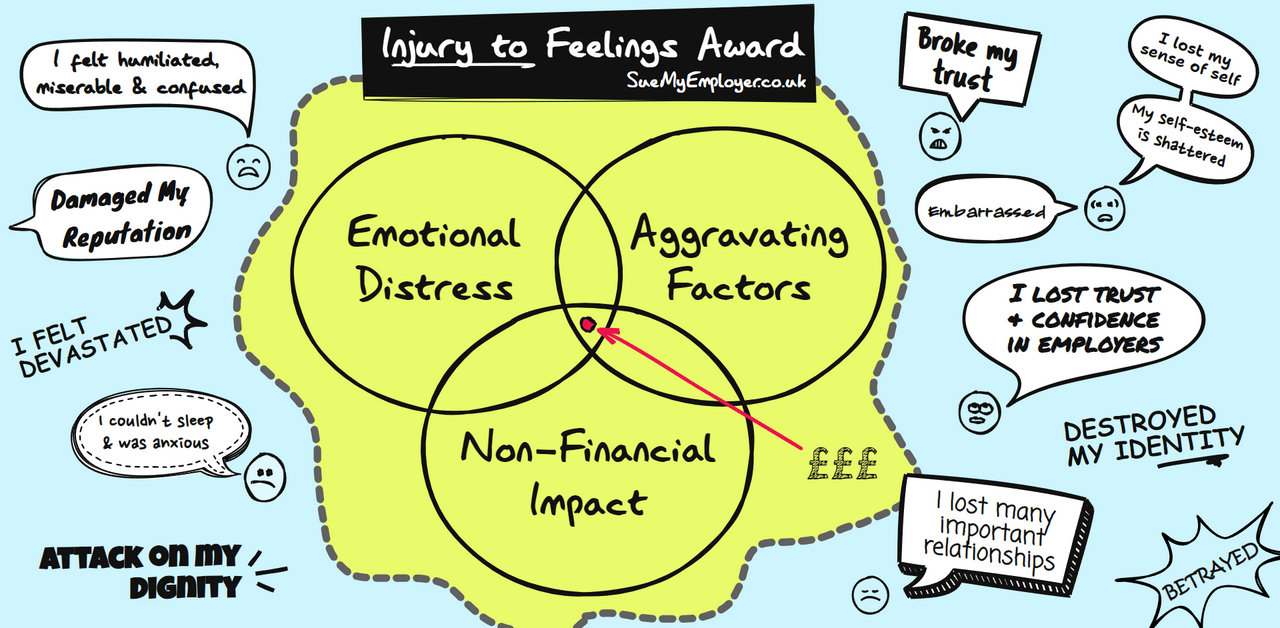
It’s important to find a middle ground between outlining and evidencing your emotional distress, aggravating damages, and any non-financial impact. Judges are particularly looking for significant distress and therefore it’s important you clearly include everything that is relevant to your situation.
If applicable, talk about your feelings of embarrassment and humiliation. Expand on this point, discussing how your employer’s actions affected your sense of self, dignity and identity. Discuss how your trust and confidence has been affected, in both yourself and future employers. Mention if your relationships have been negatively impacted, highlighting any damage to your reputation and good name. If your health, mental or physical, has been affected be sure to write about this too. Did you have trouble sleeping or get anxiety attacks? Were you left feeling betrayed and confused? Was the behaviour debilitating or cause you to consider self-harm or suicide?
Warning: Do not exaggerate, mislead or lie in an attempt to get more money. Injury to feelings awards are designed to compensate you, not to punish your employer. Where your honesty and integrity is put into question, this could negatively affect your outcome, and in some cases make you liable for costs.


